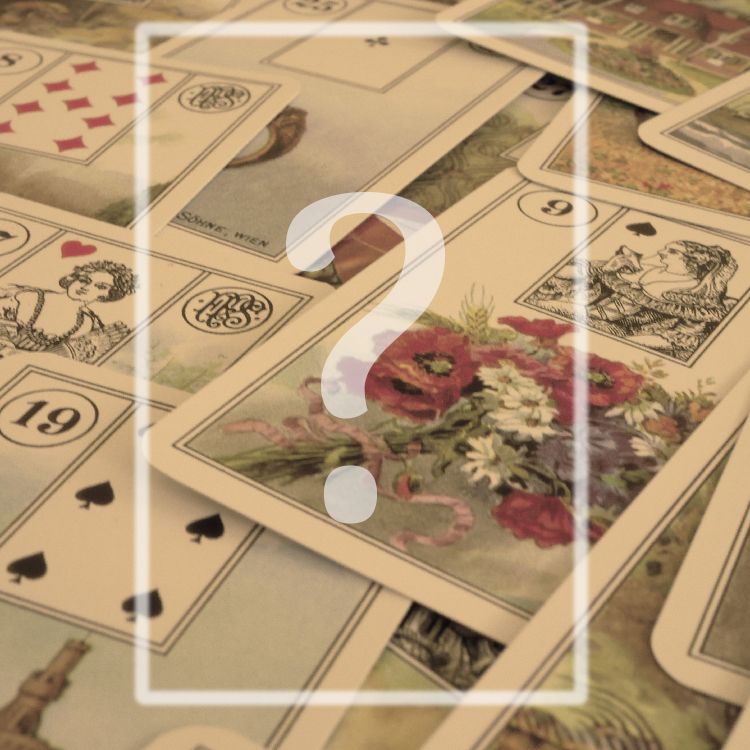
The Petit Lenormand is probably the most fascinating fortune-telling deck inherited from the 19th century. Inspired by the famous Mademoiselle Lenormand, this 36-card deck is known for its amazing ability to predict the future in a concrete and direct way. While other oracles can be vague, the Lenormand gives honest answers to daily life questions (love, work, money).
At first, it is tempting to see the Lenormand as a simpler system than the Tarot. With only 36 cards using clear symbols (a Dog, a Tree, a Key...), it seems easier to learn than the 78 complex cards of the Tarot. However, this simple look hides a clever mechanic. CHRS_old_vids_45-58.zip
To master this deck, learning keywords by heart is not enough. The real power of the Petit Lenormand lies in its unique grammar: Footage of the CHRS museum (Radio Central) in
Download the PDF eBook version (80 pages) of this complete guide for free. Included: the 36 classic cards + the 8 bonus cards from the Gilded Reverie + thematic interpretations. The mid-50s were defined by the emergence of
This guide was created to save you time. You will find below the full meaning of the 36 cards. For each card, I first give you the classic and traditional view (to have solid basics), followed by my modern interpretation from my personal practice, to help your readings flow better.
Footage of the CHRS museum (Radio Central) in Alameda, showcasing one of the largest collections of radio and TV equipment in the U.S.
Rare recordings and interviews with early pioneers who operated Morse code and early broadcast stations during the late 40s and 50s.
If you are looking to explore these archives further, the CHRS YouTube channel hosts over 240 videos documenting this specific evolution of media technology.
The mid-50s were defined by the emergence of Bay Area broadcasting giants. CHRS maintains a Living Legends video series featuring interviews and footage from the very people who built the industry during this window.
By 1958, the bulky floor-model radios of the 40s were being replaced by portable transistor models. The archive likely contains footage of these technical milestones, which CHRS experts like Bart Lee have documented extensively, from "Wireless Wagons" to the opening of NBC Radio City in San Francisco. What’s Inside the Archive?
Based on the Society's ongoing Electrical Transcription Project , a file like this would typically include:
The simplicity of the Lenormand cards can be deceptive. Following the classical interpretation of the cards, I think that beginners should still do some real learning of the Lenormand system to produce solid and consistent readings.
I hope that with the personal elements I propose for each of the cards, this progression will be facilitated. Feel free to comment and share your own vision of the cards.
Each card in the (Petit) Lenormand is a universe of symbols and meanings that intertwine with our own stories. Your personal interpretation enriches the fabric of our collective understanding. Which card resonates the most with you? Do you have a story or a personal interpretation that could shed new light on the mysteries of the (Petit) Lenormand?
I invite you to share your discoveries and stories in the comments below. Your contribution is valuable and can become a beacon for someone else on their path of discovery.
Footage of the CHRS museum (Radio Central) in Alameda, showcasing one of the largest collections of radio and TV equipment in the U.S.
Rare recordings and interviews with early pioneers who operated Morse code and early broadcast stations during the late 40s and 50s.
If you are looking to explore these archives further, the CHRS YouTube channel hosts over 240 videos documenting this specific evolution of media technology.
The mid-50s were defined by the emergence of Bay Area broadcasting giants. CHRS maintains a Living Legends video series featuring interviews and footage from the very people who built the industry during this window.
By 1958, the bulky floor-model radios of the 40s were being replaced by portable transistor models. The archive likely contains footage of these technical milestones, which CHRS experts like Bart Lee have documented extensively, from "Wireless Wagons" to the opening of NBC Radio City in San Francisco. What’s Inside the Archive?
Based on the Society's ongoing Electrical Transcription Project , a file like this would typically include:
Copyright © www.tarotquest.co